
Bespoke Stair Runners in Hungerford
A staircase, beautifully considered. Bespoke runners that bring texture, proportion and a sense of arrival to your home.
Arrange a consultation ↗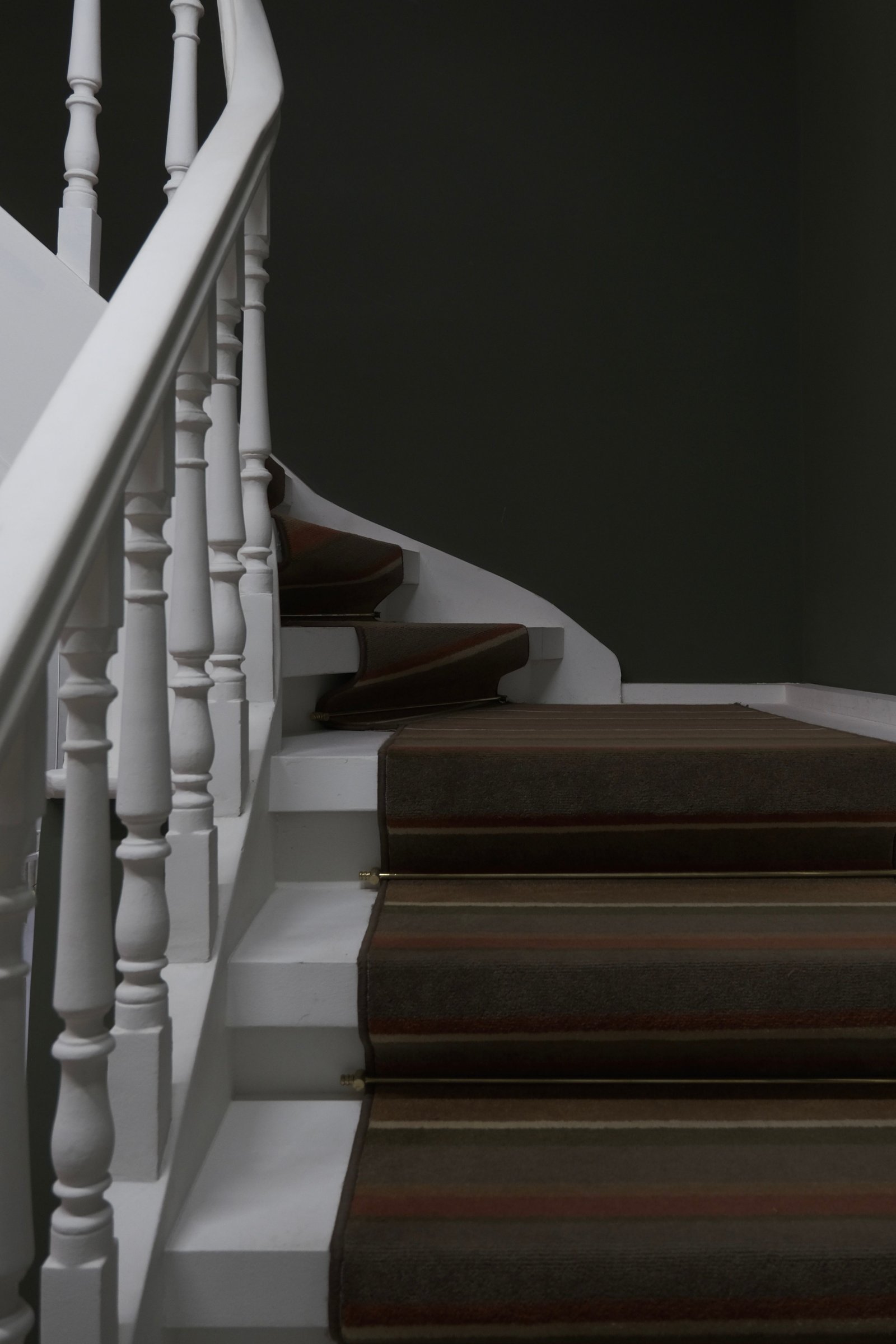
Designed around your staircase
A runner draws attention to the shape of a staircase. The amount of timber left visible, the width of a border and the way a pattern travels around a turn all contribute to its character. We begin with the staircase itself, whether it belongs to a cottage, a period townhouse, a country home or a contemporary family house. A design that feels balanced on a broad straight flight may not translate directly to narrow winding treads. The aim is a runner that belongs to the architecture and works comfortably in everyday use.
Wool, texture and alternative fibres
Wool and suitable wool blends can provide a soft, characterful surface. Loop piles bring texture, while sisal and other alternative fibres offer a more pronounced woven appearance. These are starting points for a conversation, not a promise that every construction can be fitted on every staircase. Stair suitability, flexibility, edge finishing and the way the material behaves on nosings must all be checked. Discuss pets, barefoot comfort and the possibility of wet footwear when comparing samples. A material admired in a photograph still needs to be appropriate for your particular flight.
Borders and binding, in proportion
A border can frame the centre of a runner quietly or introduce a deliberate contrast. Width matters: a broad edge on a narrow stair creates a different balance from a fine binding on a generous flight. We compare the proposed finish with the carpet, paintwork, balustrade and exposed timber. Samples are especially useful where similar neutrals meet, because small differences in undertone become more noticeable side by side. Current border and binding options are confirmed during consultation, with the selected materials and dimensions recorded before the runner is commissioned.
Pattern positioning is part of the design
Stripes, repeats and textured designs need careful setting out. The line seen from the hallway should feel intentional, and turns must be considered before material is ordered. On winding stairs, a repeated motif may read differently across each tread; on a landing, it may need a planned change of direction. We discuss these compromises openly. Mitred landing details can create a tailored result where the material and layout allow them, but they are not a universal solution. The design and fitting method should be developed together.
Measure every change of direction
Unusual staircases need more than an overall width and a count of steps. Tread shape, riser height, nosing profile, turns, landings and access all affect the plan. We measure the actual staircase and discuss how much exposed timber you would like to retain. If painting, repairs or other work is planned, tell us at the outset so the sequence can be agreed. The quotation should reflect the runner, its edge finish, the supporting materials and the installation detail, rather than a simple length of carpet.
The details beneath the runner
Underlay contributes to comfort and the way the runner sits, but it must be suitable for stairs and the chosen material. Gripper placement needs to secure the runner appropriately without exposed pins at its edges; it is a fitting detail for the professional installer, not a decorative afterthought. The underlying treads should be sound and ready before work begins. We consider transitions at the first and last step, the relationship to landing carpet and the condition of exposed edges. Those small junctions have a large influence on the finished staircase.
From the hallway to the landing
A runner can be planned alongside a coordinating landing carpet or a rug for the hall, with suitability and availability checked for each piece. Exact matching is not always necessary: related textures or a shared border colour can connect the spaces without repeating everything. Consider the floor visible at the foot of the stairs as well. Wood, LVT and carpet reflect light differently, so bring references for adjoining rooms. We can help you build a restrained scheme in which the staircase has its own character while remaining part of the home.
Fitting, care and lasting support
Professional fitting follows the agreed layout and the requirements of the selected material. We discuss access and the use of the staircase during the work so that the household can plan around it. After installation, vacuum with the recommended attachment, pay attention to grit at tread edges and deal with spills according to the fibre-specific instructions. Natural plant fibres need particular care with moisture; do not apply a general carpet cleaner without checking suitability. If an edge loosens or something changes, contact us for advice rather than attempting an improvised repair on a working staircase.
Your questions, considered
Can you measure a winding or unusual staircase?
Yes. Tell us about turns, landings and unusual shapes when arranging the home visit. The final design depends on an on-site measure and the chosen material.
Can a runner continue across a landing?
Often it can, but the layout, pattern direction and edge treatment need planning. Mitres or a coordinating fitted landing carpet may be discussed.
Can I choose sisal for stairs?
Potentially, where the exact material is rated for stair use and suits the staircase. We discuss texture, moisture sensitivity and fitting limitations before selection.
See the detail, then decide
Visit our Hungerford showroom to compare the current selection. Our project journal will include verified completed installations as photography becomes available. For local measuring advice, explore the areas we cover.
Let’s find your floor.
A showroom conversation. A free home measure.
A carefully considered beginning.